Attraction · Seoul
Gwanaksan Mountain Nakseongdae Park (관악산 낙성대공원)
77, Nakseongdae-ro, Gwanak-gu, Seoul
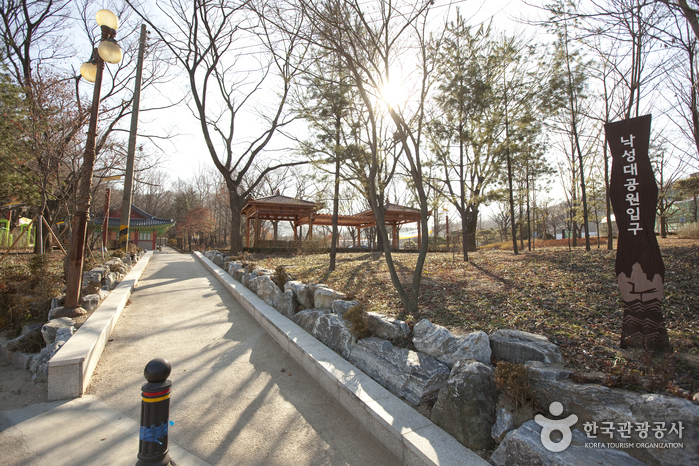
The nearest bus stop to Gwanaksan Mountain Nakseongdae Park (관악산 낙성대공원) is Nakseongdaegongwon. Dasiganeunkaempeoseu (낙성대공원.다시가는캠퍼스) (about 180 m away). See the routes that stop there and live arrival times.
- Closed
- N/A (Open all year round)
- Parking
- Available
- Information
- • 1330 Travel Hotline: +82-2-1330 (Korean, English, Japanese, Chinese) • For more info: +82-2-879-6525
Nearest bus stops
-
Nakseongdaegongwon. Dasiganeunkaempeoseu (낙성대공원.다시가는캠퍼스)about 180 m · 2 min walk · 21738Live arrivals
-
Nakseongdaegongwon. Dasiganeunkaempeoseu (낙성대공원.다시가는캠퍼스)about 213 m · 3 min walk · 21858Live arrivals
-
Seouryunghapgwahakgyoyugwon (서울융합과학교육원)about 260 m · 3 min walk · 21864Live arrivals
-
Seouryunghapgwahakgyoyugwon (서울융합과학교육원)about 328 m · 4 min walk · 21689Live arrivals
-
Hoamgyosuhoegwan (호암교수회관)about 336 m · 4 min walk · 21870Live arrivals
-
Inheonapateu (인헌아파트)about 339 m · 5 min walk · 21823Live arrivals
About this place
Nakseongdae Park was built as a tribute to General Kang Gam-chan (948-1031) of the Goryeo dynasty. In 1973, the city of Seoul reorganized the birthplace of General Kang, resulting in changes to the park. Located inside the park are Anguksa Shrine, the general’s birthplace, and a three-story stone pagoda, which was made during the Goryeo dynasty. The 4.48-meter-high pagoda is made of granite, and is called “Kang Gam-chan Tap (pagoda)” or “Kang Gam-chan Nakseongdae Tap”.
*Anguksa Shrine
Anguksa is a shrine built in 1974 emulating the wooden architecture style of the Goryeo era. The shrine has high ceilings and houses the portrait of General Kang Gam-chan. The shrine is located on the road leading to the back gate of Seoul National University and has become a popular place in the area.
*Nakseongdae Yuji
Nakseongdae Yuji is the birthplace of General Kang Gam-chan and the original location of the three-story pagoda. During the maintenance of Nakseongdae area in 1973, the pagoda was moved into the vicinity of Anguksa Shrine, and a two-meter tall monument was erected in its original location to mark the historical significance of the site.
Photo and description: Korea Tourism Organization (Type 3: attribution, no modification)