Attraction · Seoul
Deoksugung Palace (덕수궁)
99 Sejong-daero, Jung-gu, Seoul
The nearest bus stop to Deoksugung Palace (덕수궁) is Sicheonggyocharo(Mijeongcha) (시청교차로(미정차)) (about 59 m away). See the routes that stop there and live arrival times.
- Opening hours
- [General admission] 09:00-21:00 (Last admission 20:00)[Exhibition] Seokjojeon Hall 09:30-17:30 (Last docent 16:30)Dondeokjeon Hall 09:00-17:30 (Last admission 17:00)Jungmyeongjeon Hall 09:30-17:30 (Last admission 17:00)
- Closed
- Mondays (Closed the following business day in the case of Monday being a national holiday)
- Parking
- Not available
- Information
- +82-2-771-9951
Nearest bus stops
-
Sicheonggyocharo(Mijeongcha) (시청교차로(미정차))about 59 m · 1 min walkLive arrivals
-
Sicheonggyocharo(Mijeongcha) (시청교차로(미정차))about 59 m · 1 min walkLive arrivals
-
Sicheonggyocharo(Mijeongcha) (시청교차로(미정차))about 59 m · 1 min walkLive arrivals
-
Sicheonggyocharo(Mijeongcha) (시청교차로(미정차))about 59 m · 1 min walkLive arrivals
-
Sicheonggyocharo(Mijeongcha) (시청교차로(미정차))about 59 m · 1 min walkLive arrivals
-
Sicheonggyocharo(Mijeongcha) (시청교차로(미정차))about 59 m · 1 min walkLive arrivals
About this place
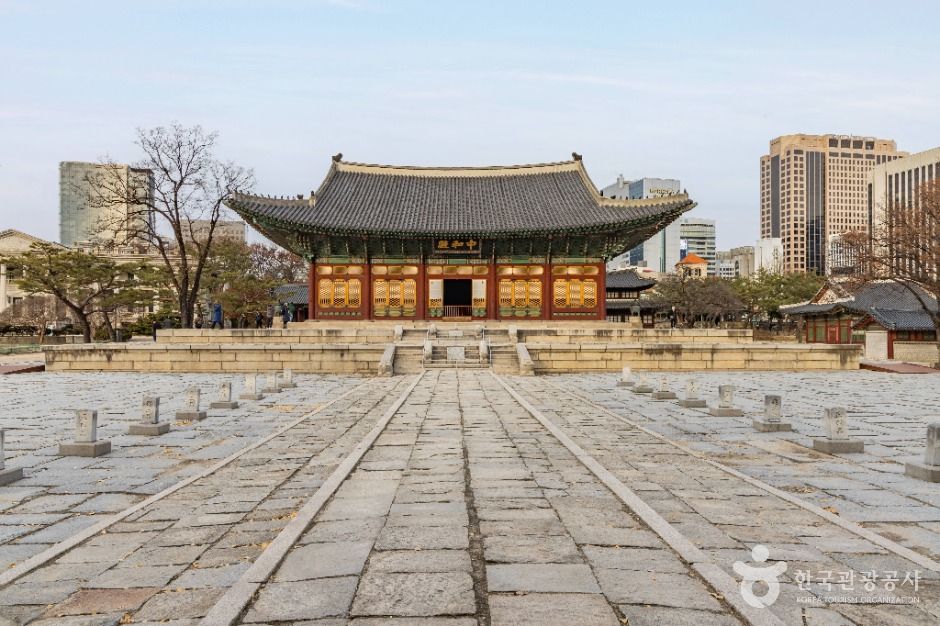
Registered as a Historic Site, Deoksugung Palace was initially not a royal palace, but the residential home of Grand Prince Wolsan (1454-1488), the older brother of King Seongjong (1469-1494) of the Joseon dynasty. It wasn't until 1593 that the palace was used as a temporary palace of the royal family after their home was burned down during the Imjin War. King Seonjo also stayed at Deoksugung Palace after returning to the city. It became a proper palace when Gwanghaegun (1575-1641) ascended to the throne and gave this royal residence the name Gyeongungung Palace in 1611. Over the following decades, the palace alternated between being an official palace and a temporary residence. The name did not change officially to Deoksugung Palace, meaning the “palace of virtuous longevity,” until 1907. While the palace once encompassed a vast area with many buildings, the current palace grounds are just a small shadow of the prior splendor, with very few structures remaining.
Photo and description: Korea Tourism Organization (Type 1: attribution)