Attraction · Seoul
Seoul Former Russian Legation (서울 구 러시아공사관)
21-18, Jeongdong-gil, Jung-gu, Seoul
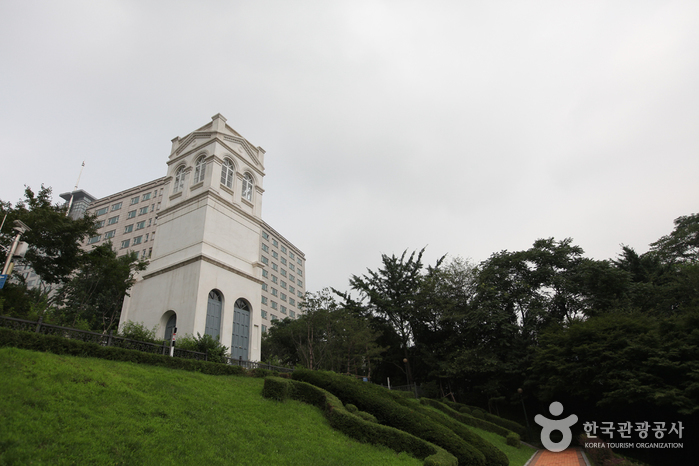
The nearest bus stop to Seoul Former Russian Legation (서울 구 러시아공사관) is Seouryeoksabakmulgwan. Gyeonghuigung-ap (서울역사박물관.경희궁앞) (about 124 m away). See the routes that stop there and live arrival times.
- Information
- • 1330 Travel Hotline: +82-2-1330 (Korean, English, Japanese, Chinese) • For more info: +82-2-3396-5882
Nearest bus stops
-
Seouryeoksabakmulgwan. Gyeonghuigung-ap (서울역사박물관.경희궁앞)about 124 m · 2 min walk · 01007Live arrivals
-
Seouryeoksabakmulgwan. Gyeonghuigung-ap (서울역사박물관.경희궁앞)about 139 m · 2 min walk · 01008Live arrivals
-
Seouryeoksabakmulgwan (서울역사박물관)about 182 m · 2 min walk · 01250Live arrivals
-
Seouryeoksabakmulgwan (서울역사박물관)about 183 m · 2 min walkLive arrivals
-
Seouryeoksabakmulgwan (서울역사박물관)about 183 m · 2 min walkLive arrivals
-
Seouryeoksabakmulgwan. Gangbuksamseongbyeongwon (서울역사박물관.강북삼성병원)about 184 m · 2 min walk · 01123Live arrivals
About this place
The Russian Legation was built in a Renaissance style in 1890. Russian architect, A. J. Scredin Sabatine designed the structure. In 1895, during the Joseon dynasty, the Eulmisabyeon Incident took place as a show of force by the Japanese. Empress Myeongseong-hwanghu was emerging as a strong figure in Korea at a time when a power struggle between Japan, China, Russia, and other powers were taking place. Japanese Minister, Miura Goro saw her as a threat and ordered her assassination. After hearing news of the Empress’s assassination, King Gojong and the Crown Prince sought refuge in the Russian Embassy for one year.
After 1945, the Soviet Union took over the embassy until it was almost completely destroyed by a fire during the Korean War [1950~1953]. The only remaining parts of the building are the tower and basement areas. The building was restored to its current condition in 1973 and is now enjoyed by many as a public park.
Photo and description: Korea Tourism Organization (Type 3: attribution, no modification)